
https://bsky.app/profile/amwinsor.bsky.social
(11/17/2025)
I was interviewed by science journalist Gennaro Tomma about a new study that documented spider-shaped web stabilimenta! Stayed tuned.
(8/18/2025)
Paul Katz and I co-wrote an eLife “Insights” dispatch for the paper, “Whole-body connectome of a segmented annelid larva” by Gáspár Jékely and colleagues. https://doi.org/10.7554/eLife.108573
(8/18/2025)
I was interviewed by Gennaro Tomma for a Scientific American article about a new study on spider venom. Check it out! https://www.scientificamerican.com/article/these-spiders-puke-up-toxic-digestive-fluid-to-marinate-their-prey-alive/
(7/11/25)
I contributed a writing segment for the “Ask an Expert” column in the children’s magazine, The Week Junior. Kids ask the best science questions!
(6/11/25)
I had a great time broadcasting live with Talk the Talk on WHMP radio—grateful for the opportunity to share my work on jumping spiders and for such a thoughtful, engaging conversation.
(6/6/25)
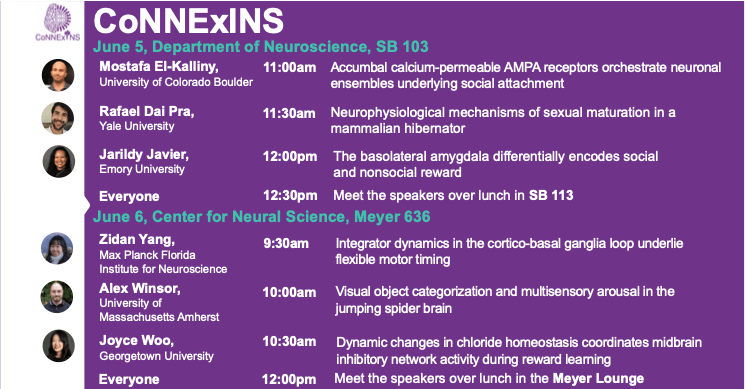
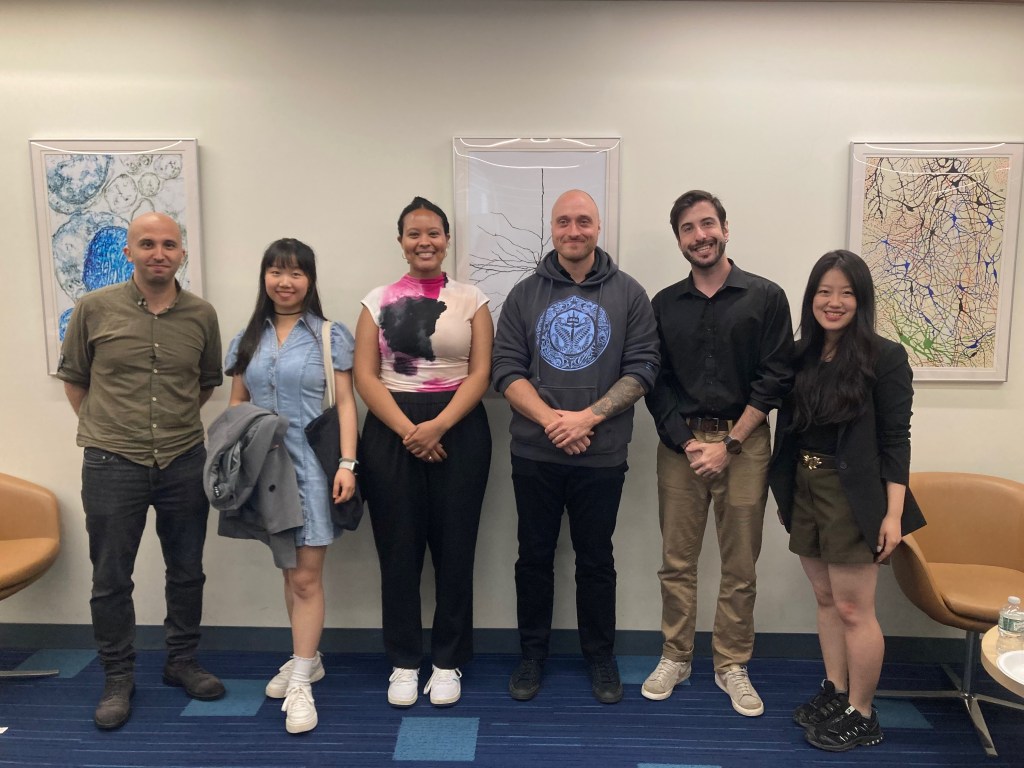
I had a wonderful time at NYU for CoNNExINS!
(5/13/255)
The May 2025 Newsletter for ISN was just posted! Check out my article spotlight on three early-career researchers.
https://internationalsocietyofneuroethology.growthzoneapp.com/ap/CloudFile/Download/pMZ3W9aP
(1/13/25)
John Tuthill wrote an article in The Transmitter about neuroscience summer courses! I am in the feature image planning an experiment with my colleagues. https://www.thetransmitter.org/craft-and-careers/why-practical-summer-courses-in-neuroscience-matter/
(12/17/24)
I was invited by Katrin Franke and Maria Diamantaki to be a speaker for the (accepted) 2025 COSYNE workshop titled “Object-centric Neuronal Representations Across Biological and Artificial Vision Systems.” My talk will explore object recognition in the modular visual system of jumping spiders. I hope you see you in Mont Tremblant, Canada! https://toliaslab.org/workshop/cosyne-object-centric/
(11/22/24)
I gave a talk about my dissertation research to Gaby Maimon’s Lab at The Rockefeller University.
(11/7/24)
I was invited by Wally Herbranson to contribute a chapter to a Routledge book on the comparative psychology of attention. (*I am writing a synthesis with concepts from active sensing.)
(10/2/24)
I was elected to serve as a ’25/26 Early-Career Representative for the International Society for Neuroethology.
(7/28/24)
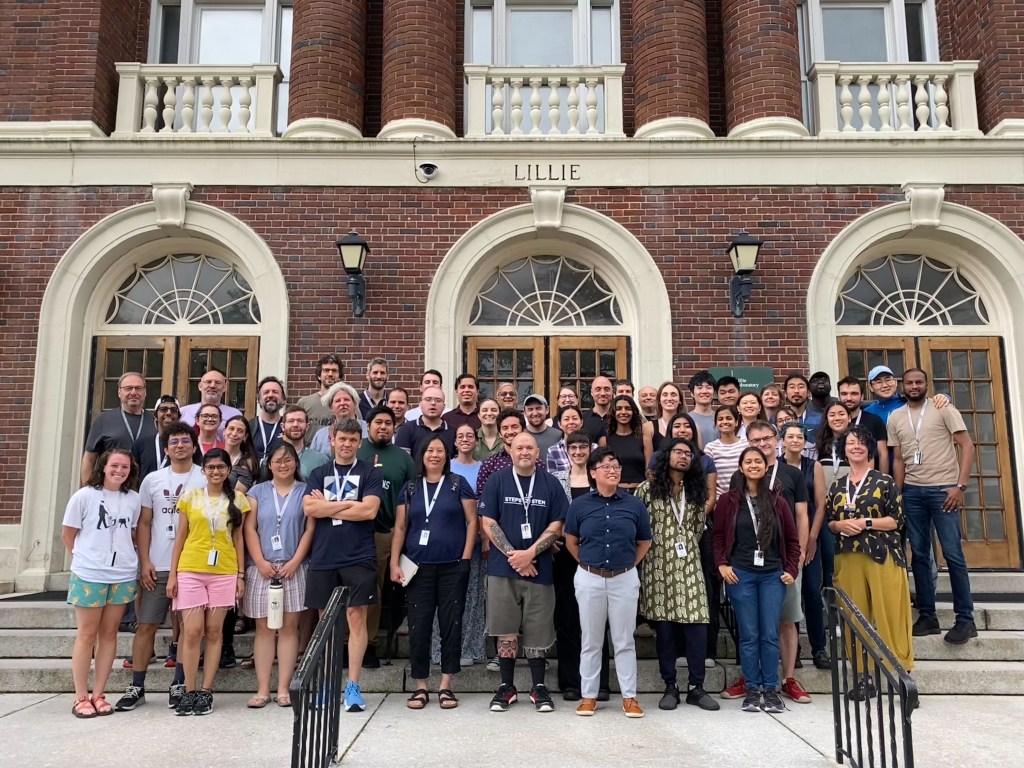
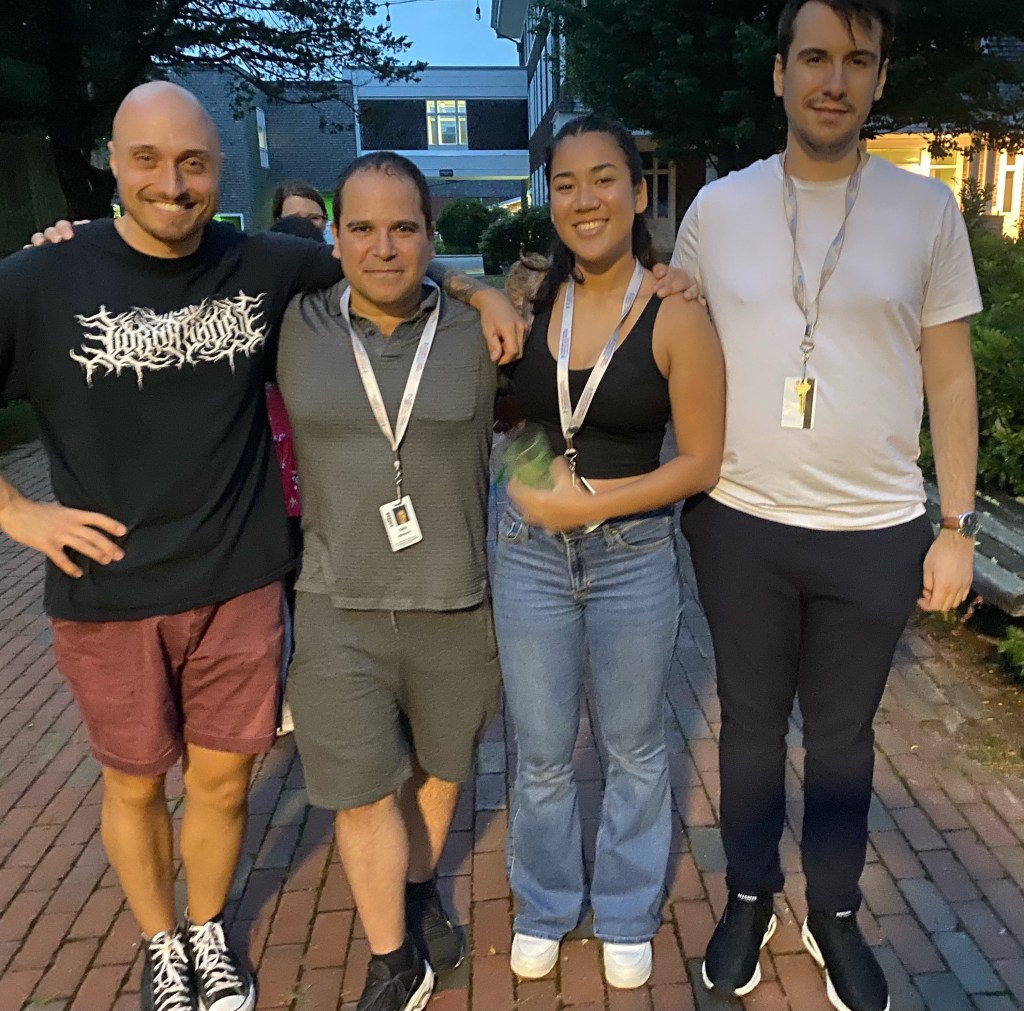
The Neural Systems & Behavior 24′ course at the Marine Biological Laboratory has finally come to a bittersweet end! Here, I learned cutting-edge science and made some lifelong connections.
(5/18/24)
Congrats to Elise Descheneaux and Wes Walsh for successfully defending their honors theses and graduating!
(4/4/24)
Undergraduate student Wes Walsh was awarded the NSF GRFP for his proposal on the effects of light pollution on jumping spider behavior. Way to go!
(4/2/24)
I had a wonderful visit at the Max Planck Florida Institute for Neuroscience! I appreciated the opportunity to present my work and learn about the fascinating research happening at MPFI.

(1/27/24)
I was accepted for the 2024 Neural Systems & Behavior course at Marine Biological Laboratory.

(12/19/23)
I was selected for the Max Planck NeuroMEETS program at the Max Planck Florida Institute for Neuroscience. My seminar will be on April 2, 2024.

(8/15/2023)
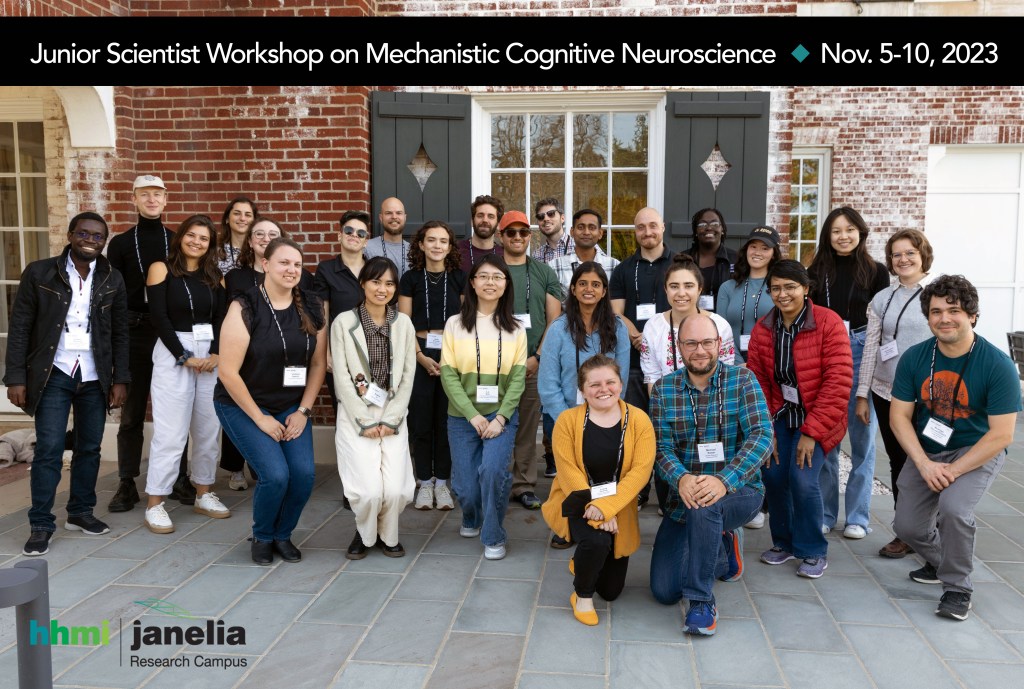
My application was accepted for the Junior Scientist Workshop in Mechanistic Cognitive Neuroscience, Nov 5-10, 2023, at Janelia Research Campus.
(8/11/2023)
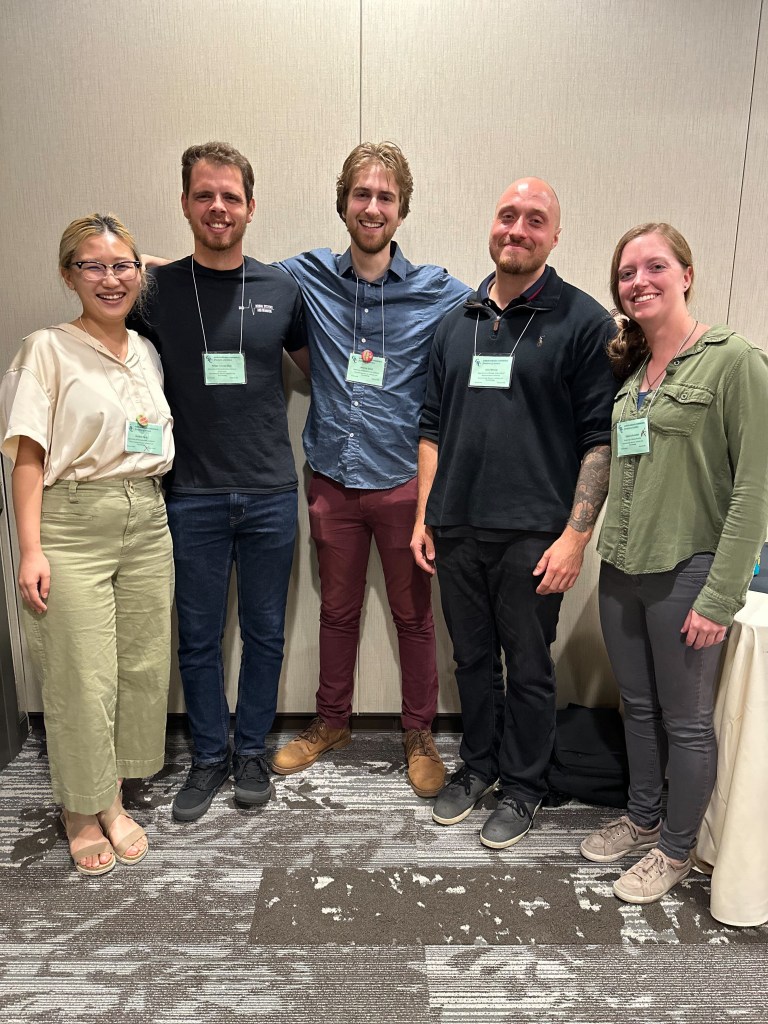
I had a wonderful time presenting my work at the Neuroethology Gordon Conference in Vermont. Here’s a group photo with the Healey Lab!
(7/31/2023)
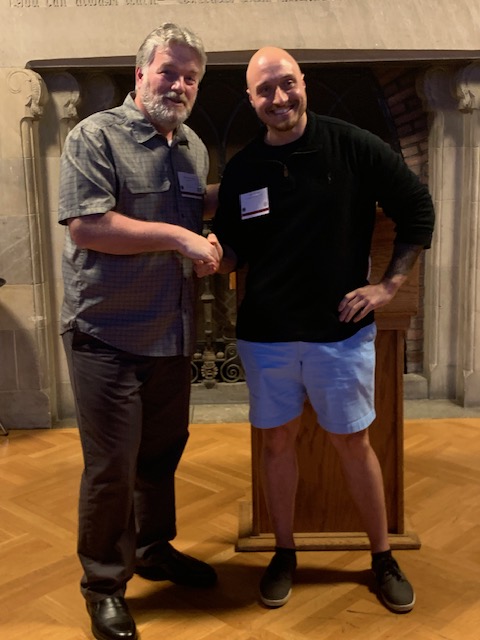
I had a wonderful time presenting my work at the International Conference of Invertebrate Vision in Sweden. The fermented beverages were aptly named.

(6/28/2023)
I was awarded 1st place for the 2023 AAS Student Paper Presentation Award!
(6/13/2023)
I submitted an abstract entitled “Neural correlates of visual object classification in the jumping spider brain” for SfN in Washington, D.C. (November 11-15). Hope to see you there!

(6/4/2023)
I was invited by Jay Stafstrom to be a speaker for the ‘Sensory Ecology’ symposium at the 2023 American Arachnological Society Conference in Ithaca, New York (June 25-29). My talk is entitled “Visual object categorization in the jumping spider brain.”
(5/1/2023)
My abstract entitled “Visual object categorization in the jumping spider brain” was accepted to the International Conference on Invertebrate Vision at Bäckaskog Castle in Sweden (July 27-August 3) and the Gordon Research Conference in Neuroethology at Mount Snow in Vermont (August 6-11).
(11/18/2022)
We have Portia labiata in the lab—they are remarkable. I even got them to mate! (Not in this video, though.)
(10/22/2022)
My video with Joe Hanson about jumping spider eyes was just published! Check it out! It was a blast to film and help get the word about jumping spiders out there.
(7/23/2022)
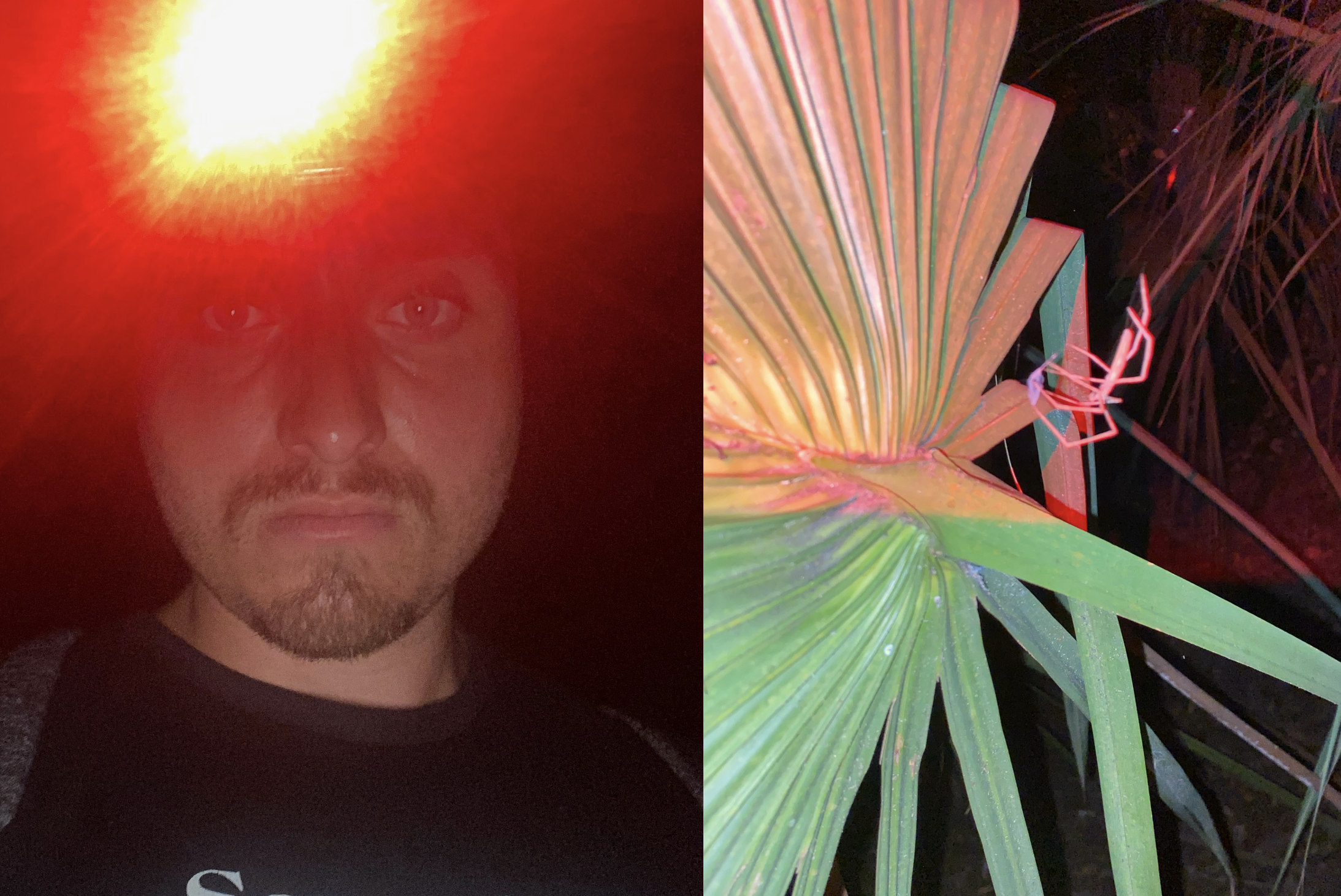
I found elusive nocturnal net casting spiders deep in the Florida pine flatwoods. These spiders live on palmetto plants, but assume very cryptic postures during the day.
(6/27/2022)
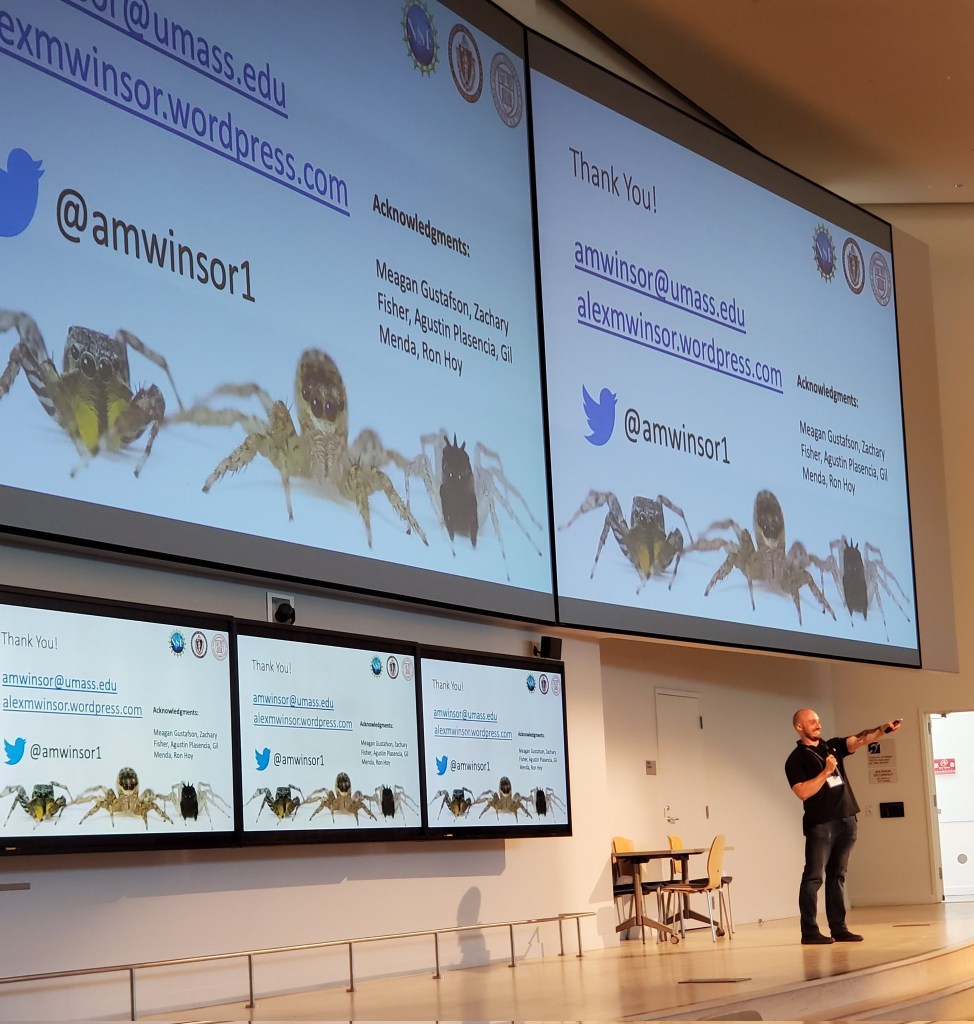
I gave a talk entitled “Cross-modal cues increase retinal activity in a jumping spider” at the 2022 American Arachnological Society Conference in Davis, California.
(1/5/2021)
I attended the CrawFly Invertebrate Neurophysiology Course hosted by Cornell University and ADInstruments.
(6/10/2020)
Congrats to Ibroxim Madjidov for successfully defending his honors thesis and graduating!
(8/1/2019)
I moved to Amherst, Massachusetts to start my PhD in Evolutionary Biology.
(5/1/2018)
Collecting Habronattus pyrrithrix jumping spiders in Arizona as part of an NSF REU project!

(3/22/2018)
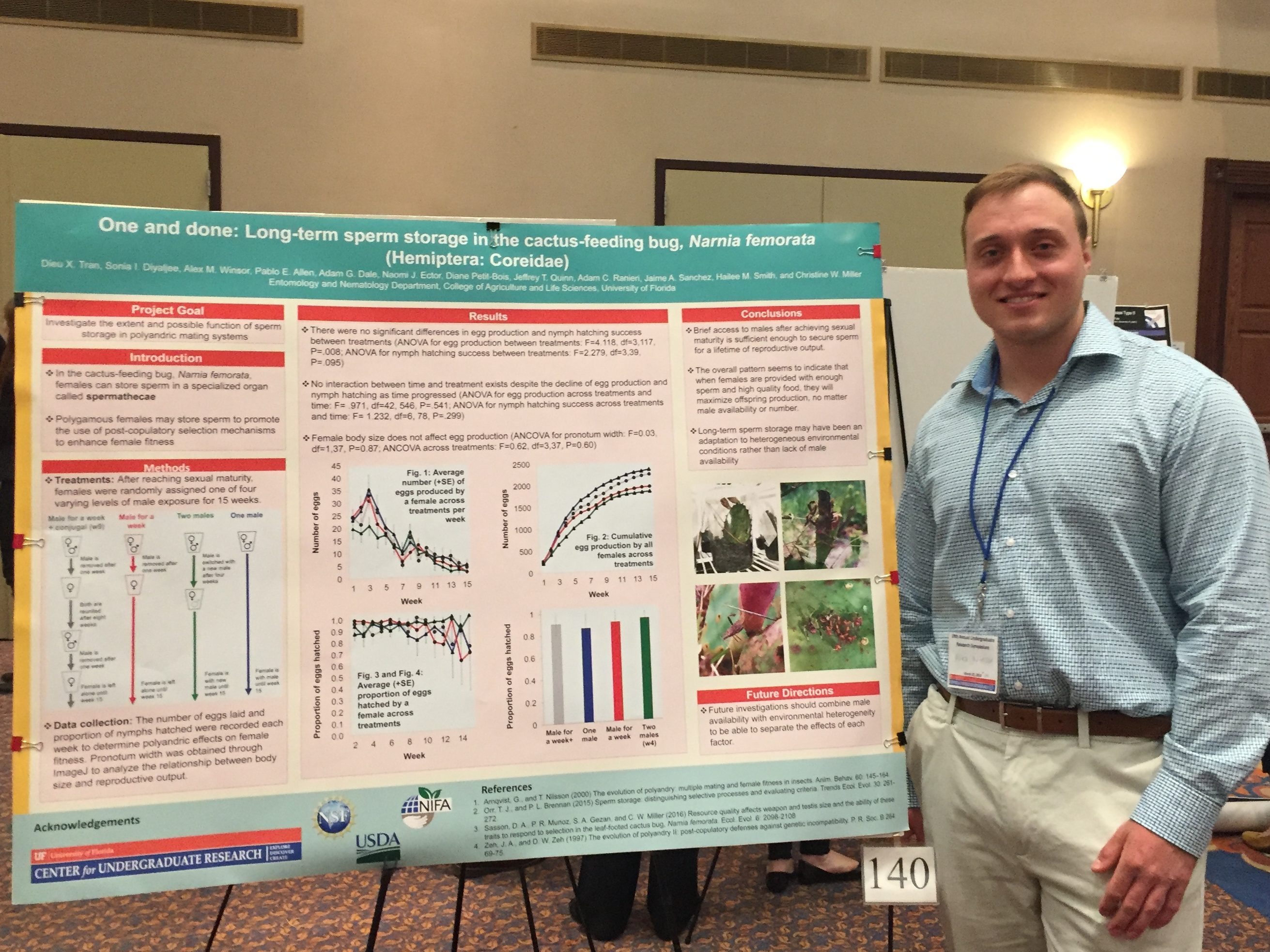
Dieu Tran and I presented some of our undergraduate work on sperm storage and fecundity in Leaf-footed cactus bugs at the UF Undergrad Research Symposium.
(2/1/2018)
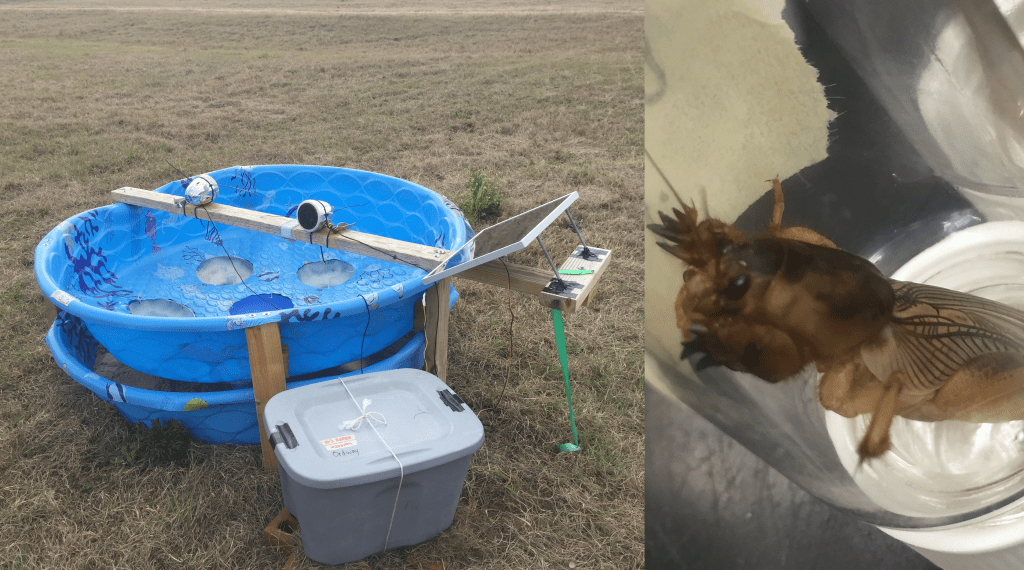
We set up custom-built acoustic mole cricket traps in cattle ranchers’ fields across rural North central Florida. Invasive mole crickets were brought back to the lab, where we checked them for parasitic nematodes and measured many of their morphological traits in ImageJ.
 Alex M. Winsor